Wearing a Mask Doesn’t Make You Inauthentic
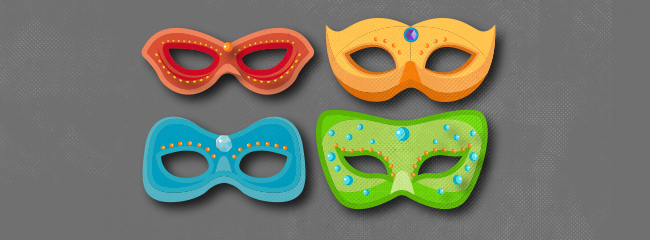
Halloween gives us one night a year to put on a costume and step into another character. But what about the other 364 days?
Some people see acting like someone else as a way of hiding who they really are. From that perspective, authenticity means taking off every mask and always being true to yourself.
That may sound like sound advice, but it can also create a limiting idea: that we must always behave according to our natural personality, and that acting differently makes us fake.
You Have More Personality Than You Think
Think of the four DISC styles as four birds: direct and assertive Eagles (D), enthusiastic and outgoing Parrots (I), caring and supportive Doves (S), and logical and detail-oriented Owls (C).
You aren’t just one style. We all have all four within us. Some come naturally; others take more conscious effort. And some may have been in the background for so long that we’ve nearly forgotten they’re there.
Consider how actors work.
An actor playing a grieving character doesn’t necessarily need to invent an emotion they’ve never felt. They can draw on memories of sadness, reconnect with those feelings, and bring them to the surface. The feelings are real, even if the circumstances are different.
Our personalities work in a similar way. We can draw out qualities that don’t usually show and bring them forward when a situation calls for them.
All four styles are part of us. Sometimes, we just need to let the quieter ones speak.
Sometimes Being Yourself Means Acting Differently
Imagine an Eagle who naturally moves fast, makes decisions, and gets things done. One day, an employee comes to them feeling overwhelmed and discouraged.
The Eagle may instinctively look for the problem and offer a solution. But the employee needs something else: someone to listen patiently, acknowledge their feelings, and give them room to process.
So, the Eagle slows down. They resist the urge to fix things immediately and listen with a Dove’s patience.
They aren’t being fake. They’re drawing on a genuine part of themselves that doesn’t always take the lead.
Adjusting your behavior doesn’t mean abandoning who you are. It means making use of more of who you are.
When we intentionally adapt to be more effective, we broaden our ability to handle life’s challenges. We uncover qualities we may have overlooked or underused.
What matters is our intention. Putting on a mask to manipulate someone isn’t okay. But adapting to a person’s or situation’s needs means drawing on a less familiar part of yourself to meet the moment. Nicely done.
The next time you catch yourself thinking, “That’s not who I am,” see whether you can find that part of yourself and bring it forward.
That’s Personality Intelligence in action. Perhaps the greatest discovery is that the person you thought you were pretending to be was within you all along. The most limiting mask is one you’ve worn for so long that you’ve mistaken it for your whole personality.
About the Author
Merrick Rosenberg is the author of Personality Intelligence: Master the Art of Being You, The Chameleon, and many other books for adults, students, and kids. He is the creator of the Eagle, Parrot, Dove, and Owl personality approach. As an award-winning speaker and President of Take Flight Learning, Merrick teaches people how to understand themselves and others through the lens of personality, because when you know your style, you unlock your path.