
Is AI Quietly Shaping Your Personality?
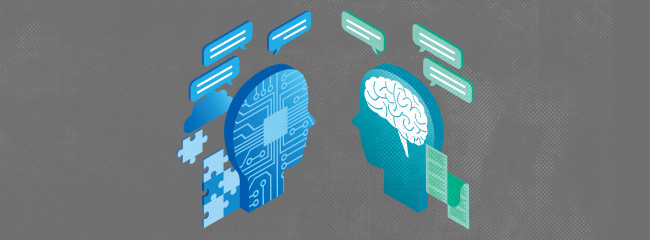
Each of us enters the world with natural behavioral tendencies shaped by our biology. Those tendencies remain remarkably consistent throughout life, but they don’t exist in isolation. Our family influences us first. Friends shape us over time. Teachers, managers, and our spouse all leave fingerprints on how we communicate, make decisions, solve problems, and relate to others.
Personality is not fixed. It evolves through experience.
Now, a new influence is entering the picture, one that didn’t exist just a few years ago.
Artificial intelligence.
Researchers are beginning to explore whether AI does more than answer questions and generate ideas. It may also be shaping how people see themselves.
A study presented at the CHI 2026 conference found that after repeated conversations with an AI chatbot about personal topics, participants’ perceptions of their own personalities gradually shifted toward the personality consistently displayed by the AI. The longer those conversations continued, the stronger the effect became.
Even more interesting, people interacting with the same AI began describing themselves in increasingly similar ways. The AI wasn’t coaching them. It wasn’t encouraging personal development or suggesting behavioral changes. It simply communicated in a consistent style.
This isn’t entirely surprising. Psychologists have long understood that people naturally adapt to those around them. Spend enough time with an optimistic person, and your outlook often becomes more positive. Work for a decisive leader, and you may become more comfortable making quick decisions. Join a highly analytical team, and your thinking often becomes more methodical.
We don’t simply exchange information with others. We absorb how they think, communicate, and approach the world. Artificial intelligence may simply be joining that list of influences.
Viewed through the lens of the DISC styles or Bird styles, as we use at Take Flight Learning, the implications become especially interesting. Imagine an AI that consistently communicates like an Eagle, direct, decisive, competitive, and focused on results. Another might sound like a Parrot, enthusiastic, expressive, and relationship-oriented. A Dove-like AI might respond with patience, empathy, and encouragement, while an Owl-like AI carefully analyzes every detail before reaching a conclusion.
If you spend hours each week interacting with one of those communication styles, it isn’t difficult to imagine parts of that style beginning to influence your behavior. You may become more direct, more patient, more analytical, and more expressive.
The question isn’t whether AI has a personality. The question is whether its personality is influencing yours.
For decades, we’ve encouraged people to choose mentors, managers, and teachers carefully because they shape thinking. We’ve reminded leaders that culture influences behavior. We’ve recognized that the people we spend time with quietly shape who we become.
Perhaps it’s time to apply that same awareness to the artificial voices we invite into our daily lives. AI may not simply be changing how we work. It may also be influencing how we communicate, how we make decisions, and ultimately, who we become.
About the Author
Merrick Rosenberg is the author of Personality Intelligence: Master the Art of Being You, The Chameleon, and many other books for adults, students, and kids. He is the creator of the Eagle, Parrot, Dove, and Owl personality approach. As an award-winning speaker and President of Take Flight Learning, Merrick teaches people how to understand themselves and others through the lens of personality, because when you know your style, you unlock your path.